
Dental group social media management is the structured process of creating, scheduling, monitoring, and optimizing social content across platforms to attract patients and build trust in a dental practice’s brand. Done right, it produces measurable outcomes: higher appointment volume, stronger online reputation, and a patient base that returns and refers. Done wrong, it creates compliance exposure that no amount of engagement can offset. This guide covers the exact prerequisites, content frameworks, compliance workflows, and measurement systems that dental group managers and marketing professionals need to run social media that actually converts.
What does dental group social media management require to work?
Effective social media management for dental groups starts with two non-negotiable foundations: a written social media policy and a clear compliance framework. Without both, every post carries legal and reputational risk.
Your written policy must define who can post on behalf of the practice, what content requires review before publishing, how patient interactions are handled, and what happens when something goes wrong. The GDC expects dental professionals to uphold the same professional standards online as they do in the clinic. That means conduct, not just aesthetics, drives every content decision.

Platform selection and team roles
The best social media platforms for dentists in 2026 are Facebook, Instagram, TikTok, and LinkedIn, each serving a distinct purpose. Facebook reaches existing patients and local community members. Instagram drives cosmetic and elective treatment interest through visual content. TikTok builds brand awareness with younger demographics. LinkedIn supports B2B relationships, referral networks, and DSO-level positioning.
Every dental group needs two designated roles: a social media manager who owns content production and scheduling, and a compliance officer who reviews posts before they go live. These can be the same person in smaller groups, but the responsibilities must be explicitly assigned.
Pro Tip: Use Hootsuite or Sprout Social for scheduling and analytics, Canva for visual content creation, and Grammarly for copy review. These three tools cover 90% of daily social media operations for most dental groups.
| Tool | Function | Best For |
|---|---|---|
| Hootsuite | Scheduling and analytics | Multi-location groups |
| Canva | Visual content creation | In-house design |
| Grammarly | Copy review and clarity | Compliance-safe writing |
| Sprout Social | Engagement tracking | Reporting to leadership |
How to develop content that actually answers patient questions
Patient-focused, question-led content outperforms promotional posts because it matches what patients are already searching for. A post answering “why do my gums bleed when I floss?” gets more saves and shares than a post promoting a teeth-whitening special. That difference in behavior signals trust, and trust converts to bookings.
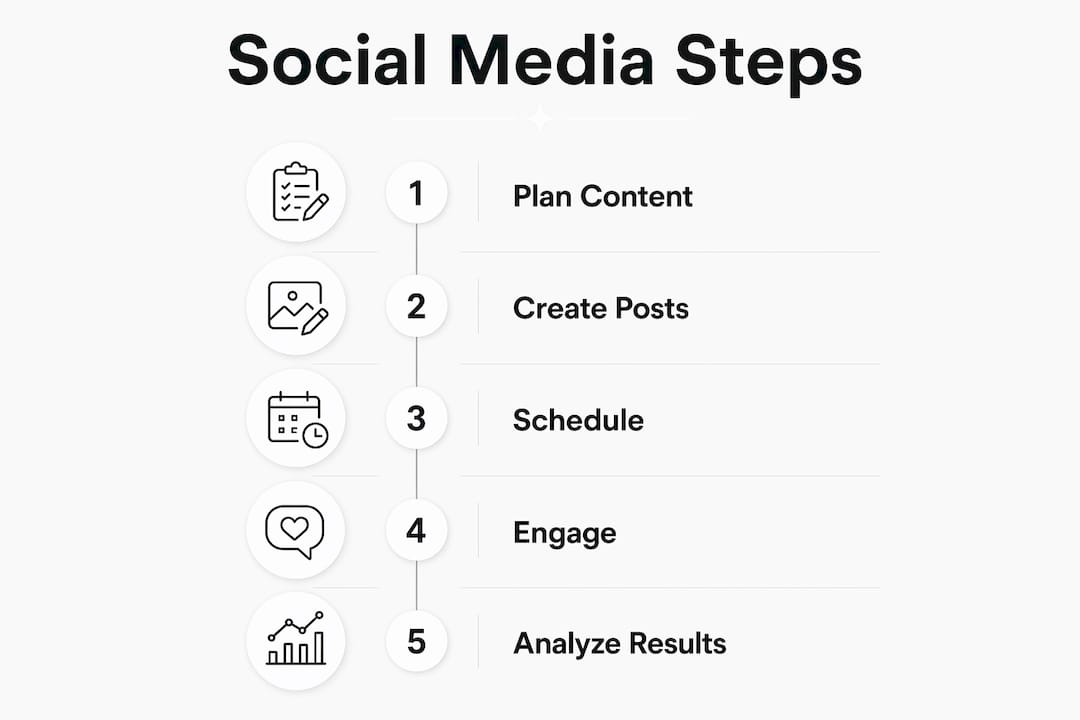
The most reliable content framework for dental groups is “one post, one question, one answer.” Each piece of content addresses a single patient concern with a direct, honest response in plain language. Questions that perform consistently include “Is this normal?”, “Why does this happen?”, and “What should I do right now?” These mirror the exact phrases patients type into Google and ask Siri.
Building a content calendar that holds
A consistent posting cadence matters more than posting frequency. Three to four posts per week on Instagram and Facebook, with one to two short-form videos, outperforms daily posting that drifts in quality. Patient scenario content drives emotional connection and higher patient action than generic promotion. A post that walks through a real patient’s anxiety about their first root canal, without identifying the patient, generates more appointment requests than a discount offer.
- Map your top 20 patient questions from front desk intake forms and Google reviews.
- Assign one question per post and write a 150-word answer in plain language.
- Pair each written post with a 30-to-60-second video version for Instagram Reels or TikTok.
- Schedule posts two weeks in advance using Hootsuite or a comparable tool.
- Review performance every 30 days and replace underperforming content types.
Video content drives 48% more engagement than static posts for healthcare accounts on Instagram and Facebook. That number means video is not optional for dental groups competing for patient attention in 2026. Even a 45-second clip of a dentist answering one common question outperforms a polished graphic with a promotional headline.
Pro Tip: Film a batch of 10 to 15 short-form videos in a single afternoon, then distribute them over six to eight weeks. This approach, which Prime Craft Media uses with clients like Dr. Avi Patel and Dr. Amit Rajani at Yonkers Avenue Dental, eliminates the weekly pressure of content creation while maintaining a consistent presence. See how to write Reels scripts that work for healthcare professionals.
What compliance workflows prevent HIPAA violations in dental social content?
The biggest compliance failure in dental social media is not a deliberate mistake. It is accidental PHI disclosure during behind-the-scenes filming, when a patient name appears on a screen in the background, a sign-in sheet is visible on the front desk, or a patient is partially visible in a hallway shot. These moments happen fast and the consequences are serious.
A pre-shoot checklist eliminates most of this risk. Before any filming or photography begins, the team should confirm the following:
- All patient-facing screens are locked or turned off.
- Sign-in sheets, appointment books, and printed schedules are removed from the area.
- No patients are present in the filming zone.
- Filming is scheduled outside of patient hours when possible.
- The compliance officer has reviewed the shot list in advance.
A detailed written social media policy must also cover how the practice responds when a patient comments on a post with personal health information. The correct response is to acknowledge the comment publicly in general terms, then move the conversation to a private, HIPAA-compliant channel. Never confirm or deny any clinical details in a public reply.
“Training the entire team regularly on social media compliance reduces the risk of violations. Quarterly refreshers and a designated compliance officer are industry best practices.” Dentplicity Blog
Quarterly team training on social media compliance is not a one-time event. Staff turnover, platform changes, and new content formats all create new exposure points. Assign a compliance officer, schedule quarterly refreshers, and document every training session.
How to connect social media efforts to actual patient bookings
Social media amplifies patient acquisition only when it is layered on top of a working conversion infrastructure. Sequencing social as an amplification channel on top of SEO and Google Business Profile produces higher conversion rates than running social media in isolation. A patient who sees your Instagram Reel, then finds your Google Business Profile with 80 five-star reviews, and then lands on a fast-loading website with a clear booking button converts at a significantly higher rate than one who only sees the social post.
Before scaling any social media investment, confirm that your website has a clear call to action on every page, your Google Business Profile is fully optimized, and you have a system to track where new patients come from.
Paid ads vs. organic: what the numbers say
| Strategy | Monthly Cost | Time to ROI | Best Use Case |
|---|---|---|---|
| Organic social | $300 to $600 | 3 to 6 months | Brand building, trust, education |
| Facebook/Instagram ads | $150 to $350 | 1 to 2 months | Cosmetic treatments, new patient offers |
Organic social costs $300 to $600 monthly with ROI appearing after three to six months. Facebook and Instagram ads run $150 to $350 with ROI in one to two months. That difference matters for budget planning: paid ads are faster for patient acquisition campaigns, while organic content builds the long-term trust that makes paid ads convert better.
Tracking conversions to booked appointments requires unique phone numbers per channel, form tracking on your website, and a front desk habit of asking every new patient how they found the practice. Without this attribution system, you cannot know which social content is generating revenue.
Pro Tip: Add a unique tracking phone number to your Instagram bio and Facebook page. When a new patient calls that number, you know exactly which channel drove the booking. This single step transforms social media from a cost center into a measurable revenue line.
Common challenges in managing dental group social media
Even well-organized dental groups run into predictable obstacles. Recognizing them early prevents the slow drift that turns a strong social presence into an inconsistent one.
- Content quality drops under volume pressure. When the team feels pressure to post daily, quality suffers and compliance checks get skipped. A smaller number of well-produced, reviewed posts outperforms a high volume of rushed ones.
- Promotional content crowds out patient education. Analytics consistently show that educational posts outperform promotional ones in saves, shares, and profile visits. If more than 30% of your posts are promotional, rebalance the calendar.
- Negative reviews and comments go unanswered. Ignoring negative feedback on social platforms signals indifference to prospective patients reading those comments. Respond to every review within 24 hours, acknowledge the concern, and invite the person to contact the practice directly.
- No one owns the analytics. Social media without regular performance review becomes guesswork. Assign someone to pull a monthly report from Hootsuite or Sprout Social and present findings to the marketing lead.
- New staff create compliance gaps. Every new hire who touches social media needs onboarding that includes the written social media policy and a HIPAA compliance briefing before they post anything.
Key takeaways
Dental group social media management produces real patient acquisition results only when compliance, content strategy, and conversion tracking operate as a connected system.
| Point | Details |
|---|---|
| Compliance comes first | A written HIPAA policy and pre-shoot checklist prevent violations before they happen. |
| Question-led content wins | Posts answering real patient questions generate more saves, shares, and bookings than promotional content. |
| Video is non-negotiable | Video drives 48% more engagement than static posts on Instagram and Facebook for healthcare accounts. |
| Paid and organic serve different goals | Organic builds trust over 3 to 6 months; paid ads drive patient acquisition in 1 to 2 months. |
| Attribution closes the loop | Unique tracking numbers and source questions connect social engagement to booked appointments. |
What I’ve learned managing social media for dental groups
Working with practices like Beyond the Arches and Smile Partners USA on the DDS podcast has shown me one consistent pattern: the dental groups that struggle with social media are not struggling because of a lack of content ideas. They are struggling because no one owns the compliance layer, and the content calendar is built around what the practice wants to say rather than what patients are actually asking.
The behind-the-scenes content trap is real. A team gets excited about filming a “day in the life” video, and no one checks whether a patient name is visible on the monitor in the background. That one oversight can undo months of trust-building. The pre-shoot checklist is not bureaucracy. It is the difference between a great piece of content and a HIPAA incident.
The other shift I push every dental group to make is treating social media as a trust channel, not a sales channel. When Dr. Naved Fatmi started answering patient questions on video instead of promoting his services, his inbound consult requests increased without any change in ad spend. The content did the selling because it demonstrated expertise and approachability simultaneously.
Measurement is where most groups leave money on the table. Social media without attribution is just brand awareness with no feedback loop. When you connect a tracking phone number to your Instagram bio and train the front desk to ask every new patient how they found the practice, you suddenly have data that justifies the investment and tells you exactly what content to produce more of.
Sajal
How Prime Craft Media helps dental groups build a social presence that converts
Dental groups that want to manage their social media with the same rigor they apply to clinical operations need a content system, not just a content calendar.
Prime Craft Media builds done-for-you content engines for dental groups and DSOs, starting with a single production day that generates months of HIPAA-aware video content, patient education posts, and platform-specific assets. AI avatar versions of your doctors handle scale content (educational shorts, multilingual videos, podcast repurposing, DSO-wide videos across dozens of locations) while real-doctor production handles the trust moments that convert patients to bookings. The content methodology covers production, compliance review workflows, distribution across Facebook, Instagram, and TikTok, and attribution tracking so every piece of content connects back to patient bookings. If your group is ready to build a social media presence that generates inbound consult requests consistently, Prime Craft Media has the system to make it happen.
FAQ
What is dental group social media management?
Dental group social media management is the structured process of creating, scheduling, and monitoring social content across platforms like Facebook, Instagram, and TikTok to attract patients and build trust for a dental practice or DSO.
Which social media platforms work best for dental practices?
Facebook and Instagram are the highest-ROI platforms for most dental groups, with TikTok growing rapidly for patient education content. LinkedIn serves DSO-level networking and referral development.
How do dental practices stay HIPAA-compliant on social media?
A written social media policy, a pre-shoot checklist to clear patient information from filming areas, and quarterly team training are the three core requirements for HIPAA-compliant dental social media.
How long does it take for dental social media to generate ROI?
Organic social media typically produces measurable ROI after 3 to 6 months. Paid Facebook and Instagram ads can show ROI in 1 to 2 months, making them faster for patient acquisition campaigns.
How do you measure social media results for a dental practice?
Use unique tracking phone numbers per platform, website form tracking, and a front desk intake question asking how the patient found the practice. These three inputs attribute social results to actual booked appointments.